Drawings of Trees With a Moon
How to capture the marvellousness of moonlight? As the photos floating around Twitter testify, it is difficult to do so on a smartphone: it comes out as a pitiful streak, a smear, a sad shadow of its original self.
Thankfully many artists throughout the ages have captured the moon through some wonderful lunar art. Now seems a timely moment to shine a light on lunar art, as this year sees no less than three supermoons – the term 'supermoon' refers to 'perigee', the moon's closest point to Earth in its elliptic orbit; indeed, supermoons are also known as 'perigean' full moons.
The next full moon on 19th February 2019 will be the most super of all – the moon will be 356,846 kilometres from Earth, which is pretty much as close as it gets. What I love about lunar events such as supermoons is the way they seem to unite people the world over, who step into the night and gaze heavenwards in an attempt to glimpse this marvel.
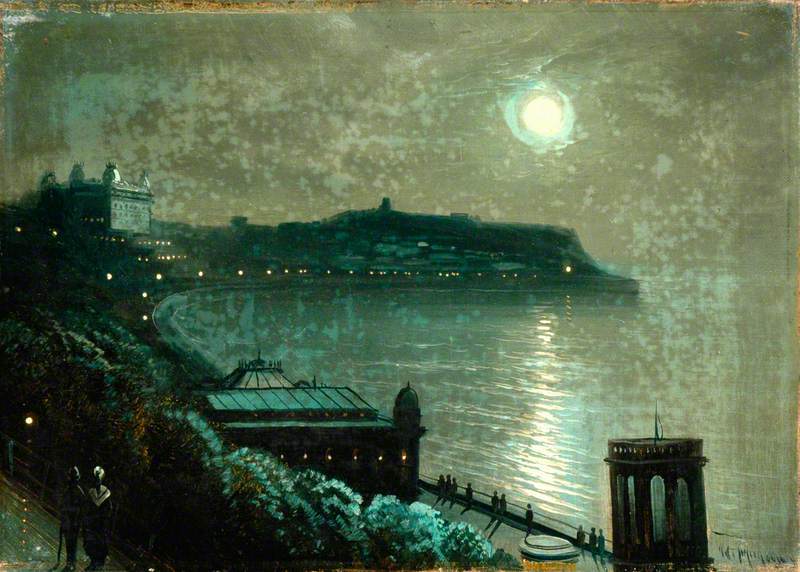
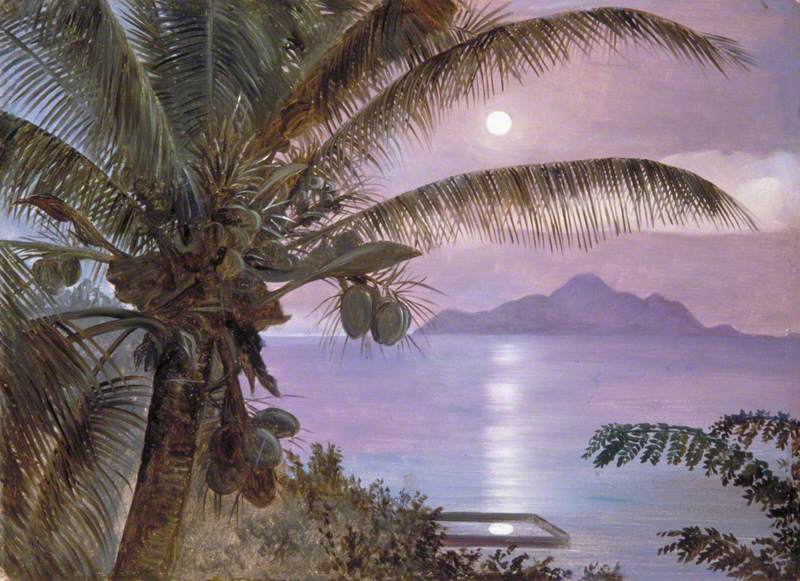
In lunar art, the moon is depicted in places all over the world, in remote mountains, islands, forests, villages, towns, cities. Some highlights include the nineteenth-century paintings Moon Reflected in a Turtle Pool, Seychellesby Marianne North (above), in which purple hues fill the sky and a moon peeps through a palm tree laden with coconuts, and The South Bay at Night With Full Moon by Walter Linsley Meegan, filled with an eerie green light.
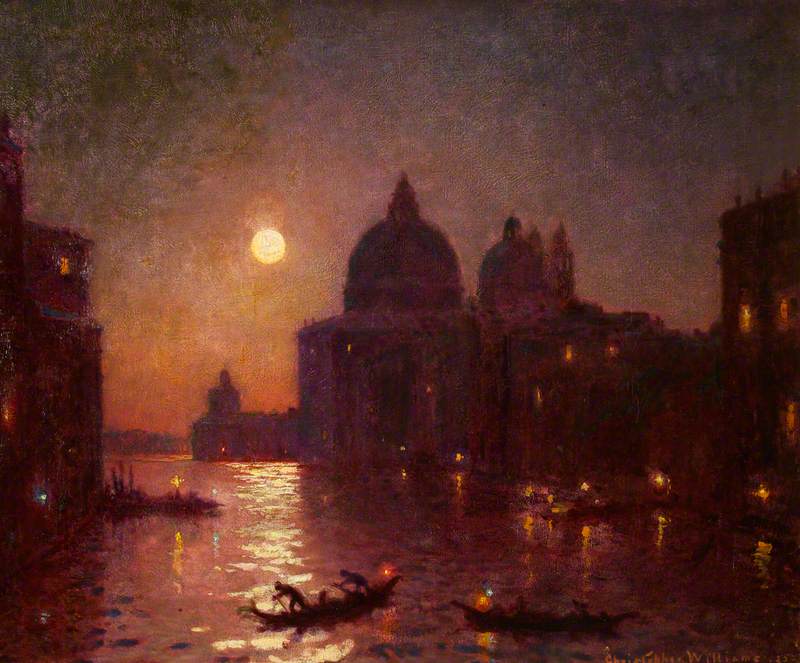
Venice, Moonlight by Christopher Williams brilliantly captures, in burgundy light, the silhouettes of the city's buildings and boats.
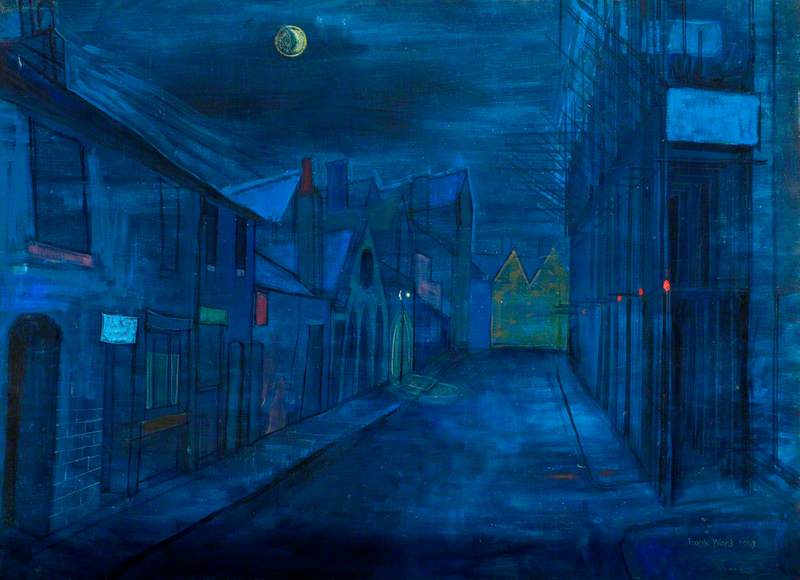
Closer to these shores is Street Scene, Wolverhampton,in which the moon hangs over a deserted night street, and Winter Moonrise, Yorkshire.
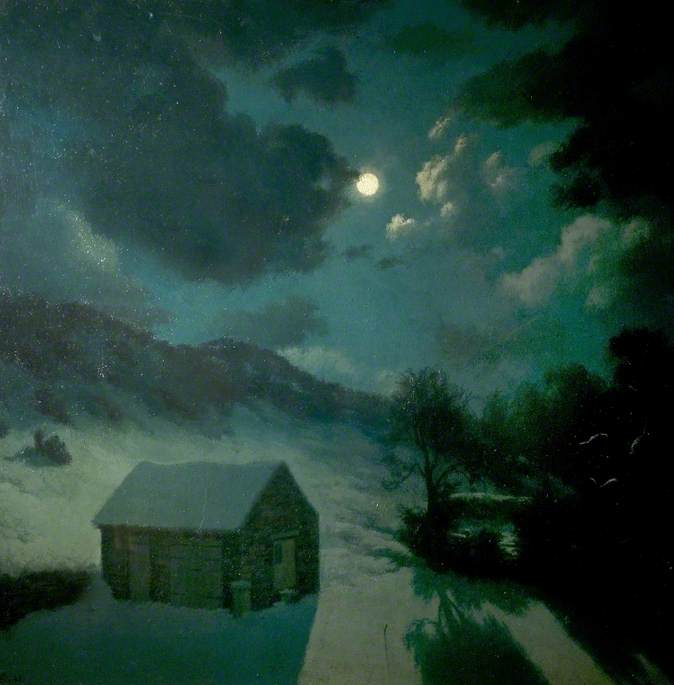
In many paintings, the moon is seen set in an anonymous landscape, whilst others zoom in closely so the moon fills the painting.
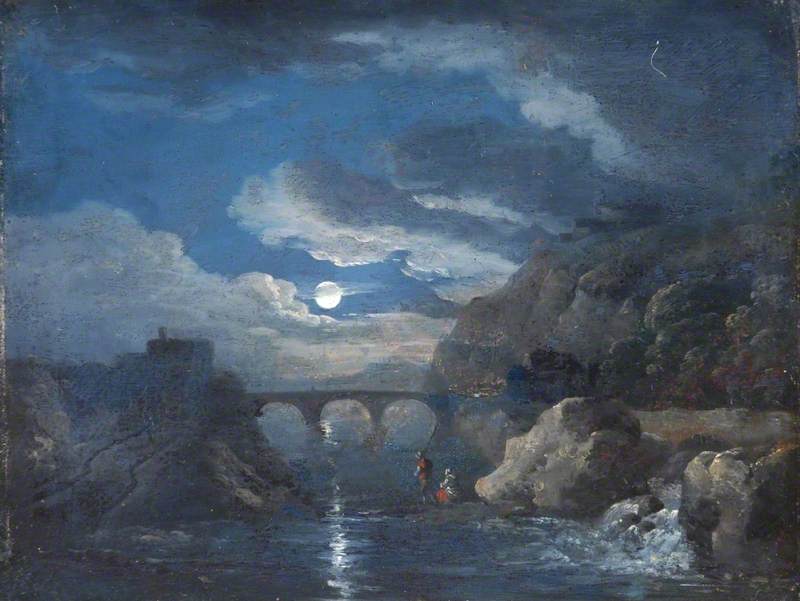
For example, the eighteenth-century painting Landscape, Moonlight shows the moon in a wide context of bridge, sea, sky.
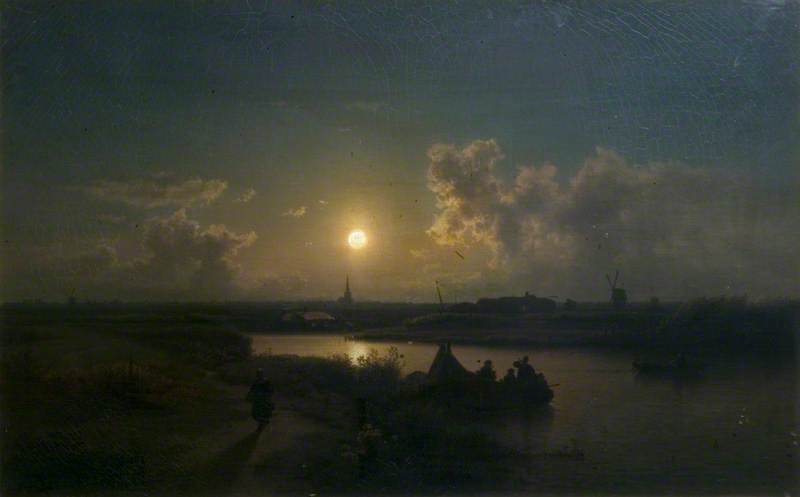
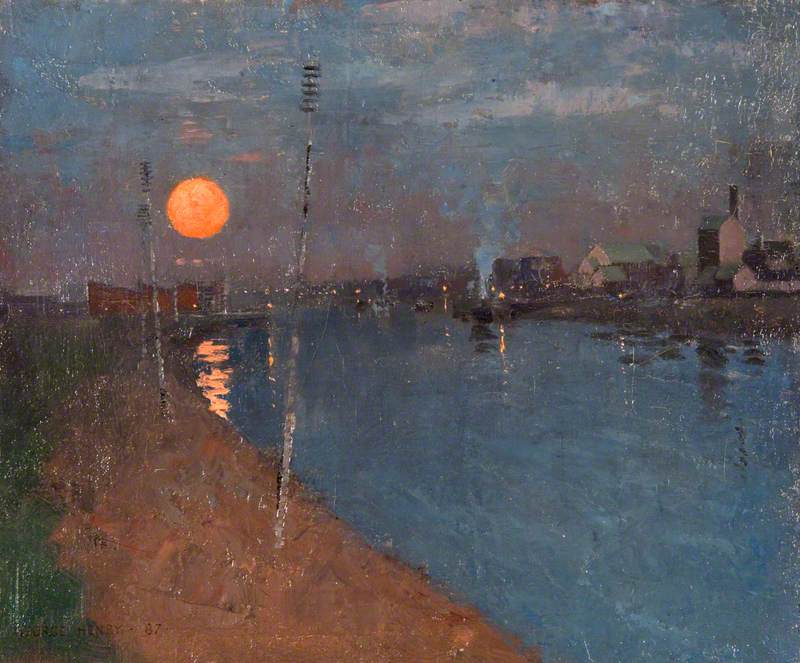
And the beautiful nineteenth-century River With Moonlight Effect by Karl Adloff and River Landscape by Moonlight by George Henry also see the moon in a landscape: the quality of light the artists managed to depict attests to the true power of painting.
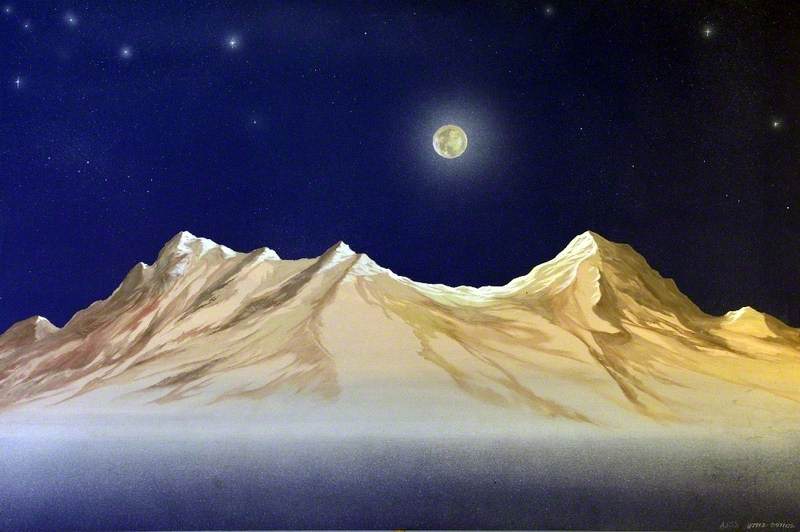
Mountain and Moon
George Nicholas (b.1955)
Aintree University Hospitals NHS Foundation Trust
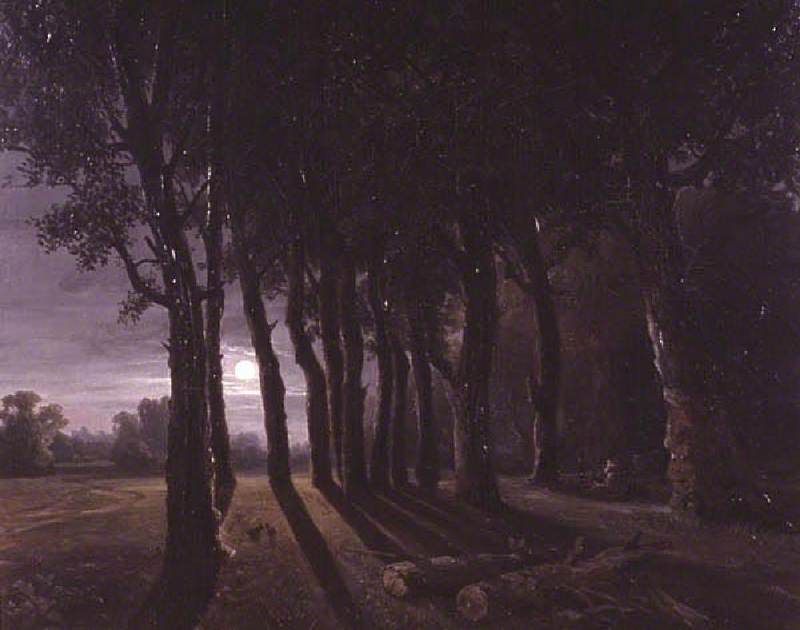
Then there is the simple yet potent Mountain and Moon, in an unnamed place, and the nineteenth-century Moonlight in the Forest by Joséphine Bowes in an unnamed forest.
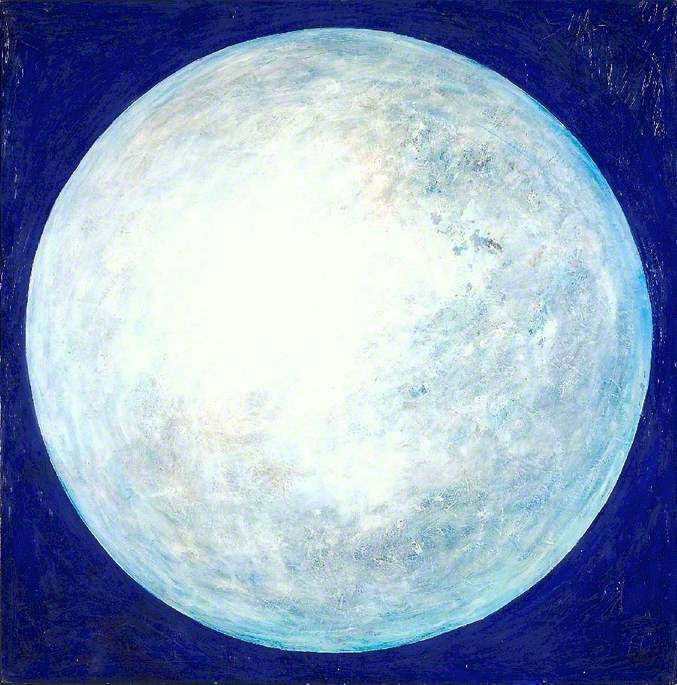
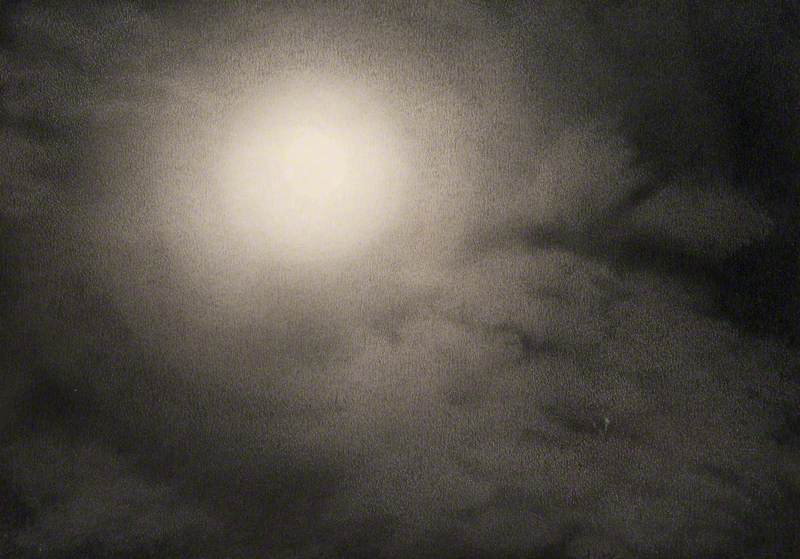
Meanwhile,Silver Moon shows the moon taking up most of the canvas, as it does in Moon and Clouds by Bet Low.
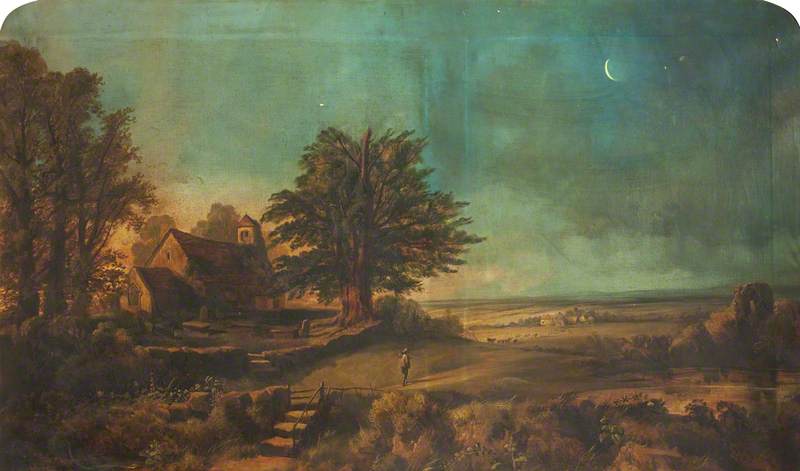
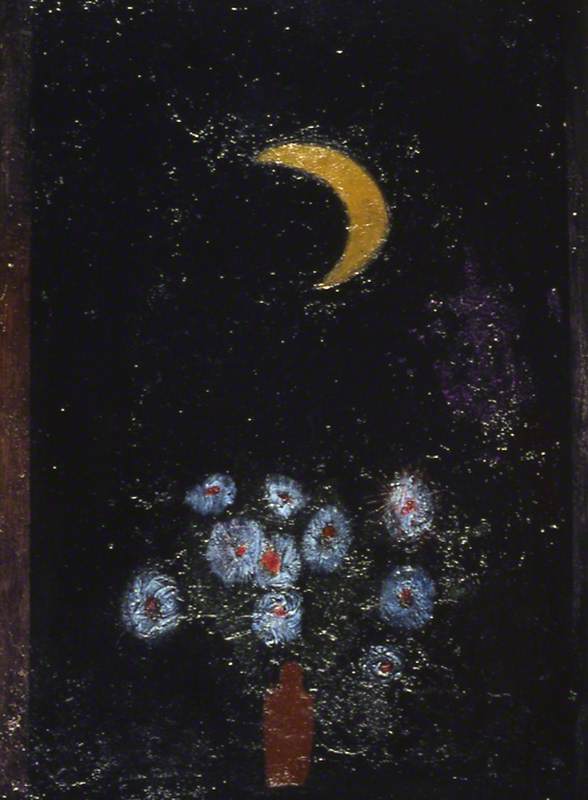
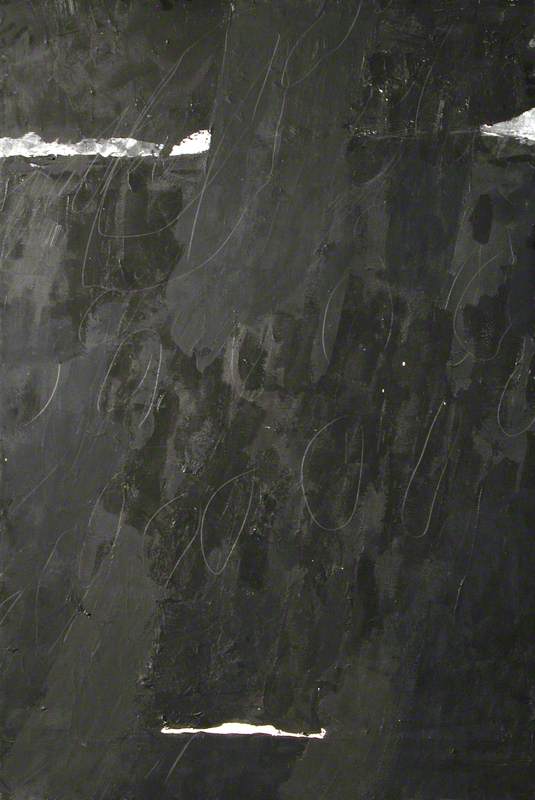
The moon is shown in all of its phases, from gloriously full to a no-less-compelling crescent. A crescent moon hangs in the sky in Landscape, with Crescent Moon, Church and Graveyard and a yellow crescent is also in the more abstract painting Black Night by Robert Leishman.
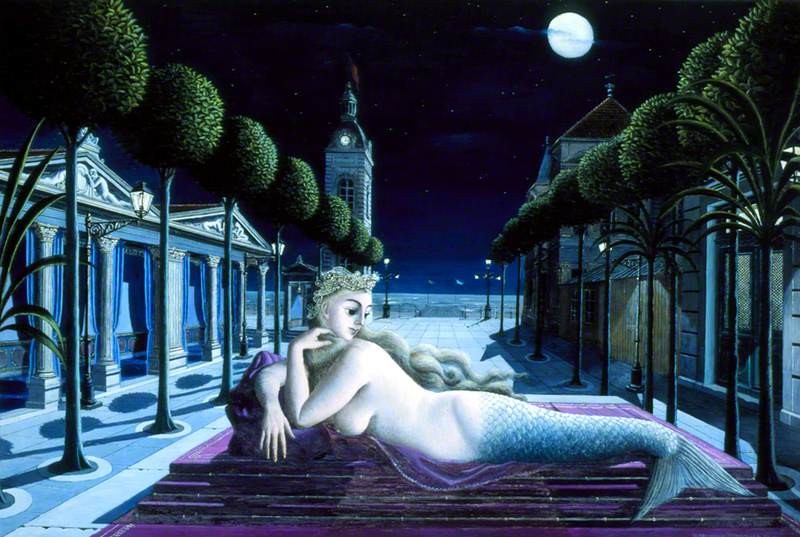
A Siren in Full Moonlight reminds us of all the extra layers of meaning attached to the full moon, and a full moon is also seen in Moonlight and Lamplight which juxtaposes natural and artificial light.
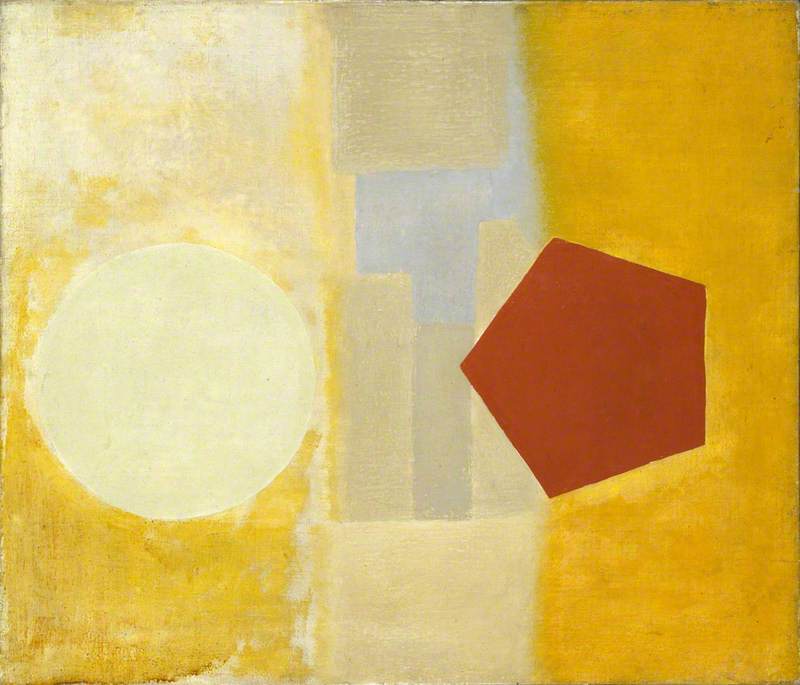
One of my favourite sayings about the moon is from Anton Chekhov: 'Don't tell me the moon is shining, show me the glint of light on broken glass', and indeed artists have experimented with showing not only the full shine of the moon but in more subtle glints and hints – indeed its elusiveness is spookily shown in The Uncertainty of the Waning Moon by Aguri Kitamura.
There are many paintings powerfully depicting moonlight on the sea, perhaps little wonder given that the moon's gravitational pull on Earth is the main cause of the rise and fall of ocean tides.
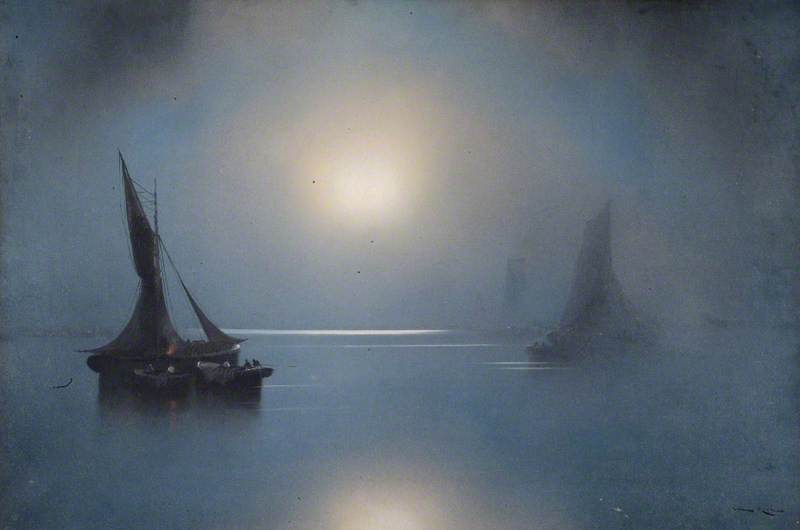
Moonlight c.1880
Joachim Hierschl-Minerbi (1834–1905) (attributed to)
Reading Museum
Moonlight, attributed to the nineteenth-century artist Joachim Hierschl-Minerbi, captures just how immensely eerie moonlight can be, here as it reflects on the sea.
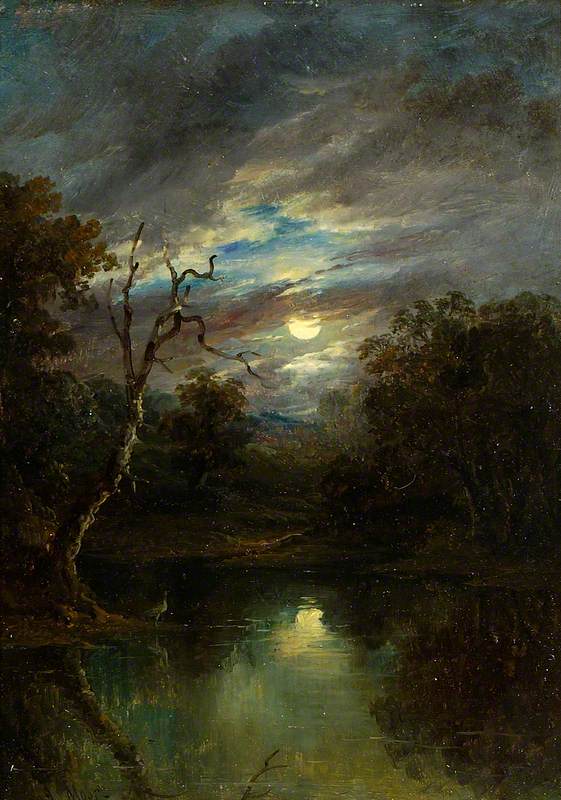
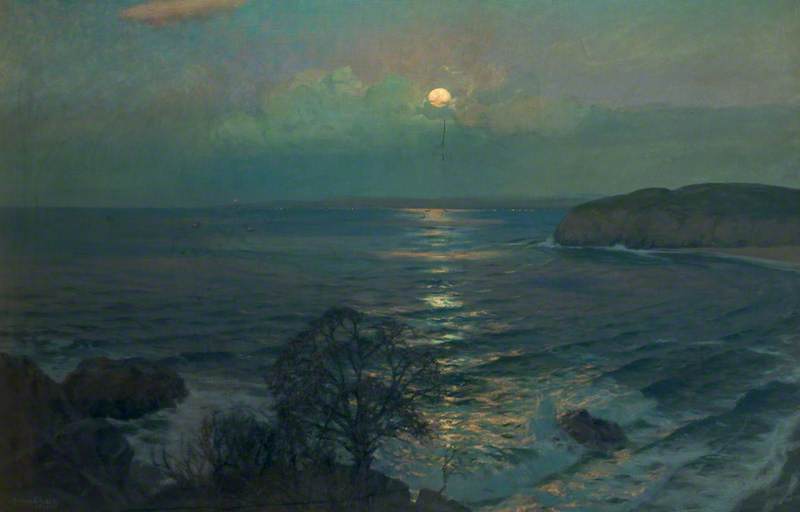
The moon's reflection upon water is also captured in Moonlit Landscape by John Moore of Ipswich, and its journey through the skies in the turquoise-hued Rising Moon, St Ives Bay, Cornwall by Albert Julius Olsson.
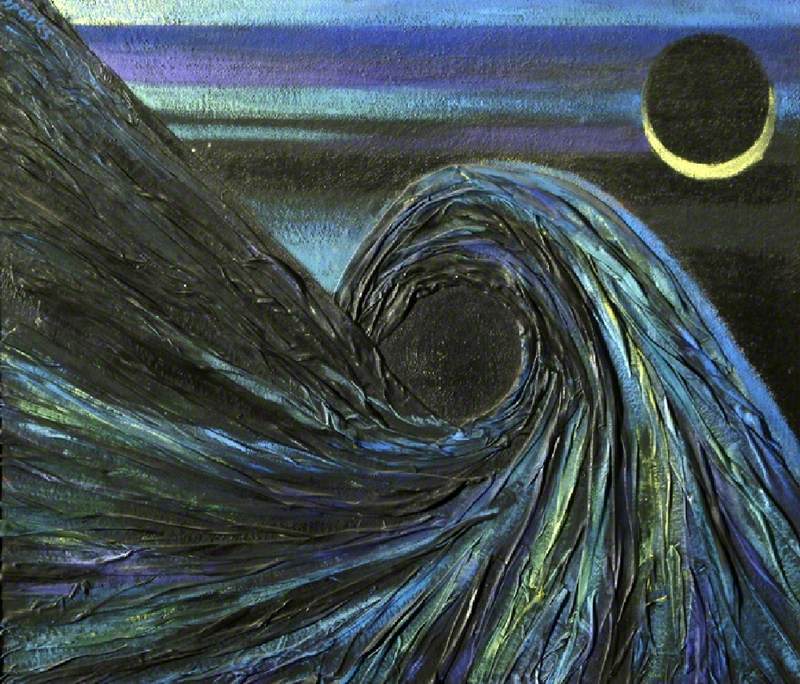
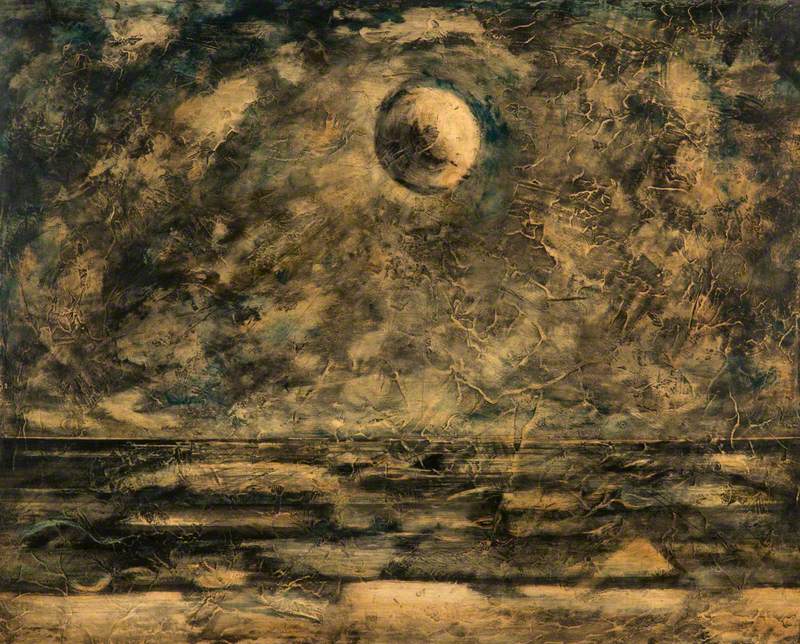
A New Moon and a Vortex (The Wave) by Wendy Spooner also strikingly shows this relationship, albeit in a very different, abstract style, and an abstract style is favoured too by Kenneth Lawson in Moon and Sea.
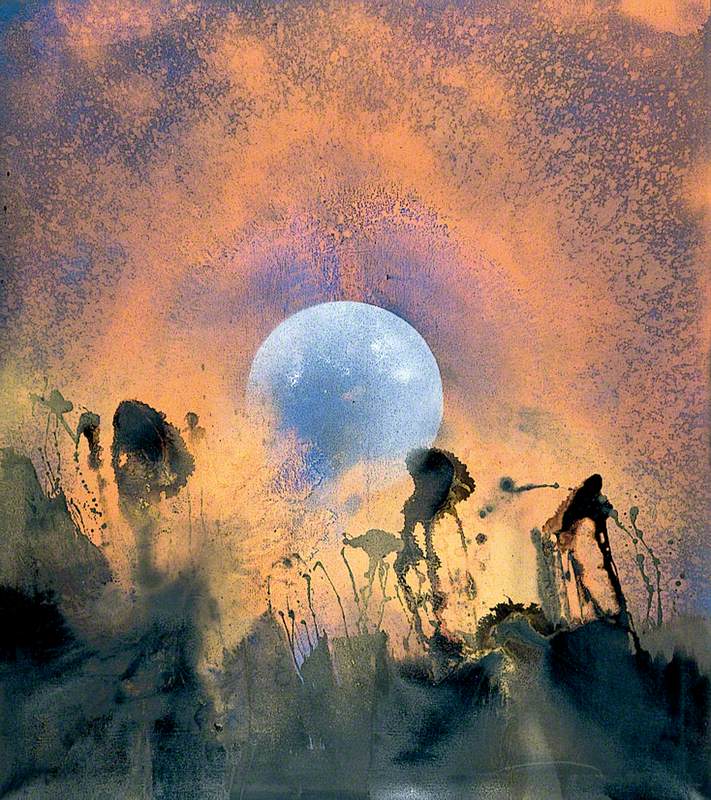
A particularly powerful abstract is also Moon Rising by Denis A. Bowen.
If the moon has a powerful pull on the sea, it has a no less potent effect on us human beings, on our imaginations, minds and emotions.
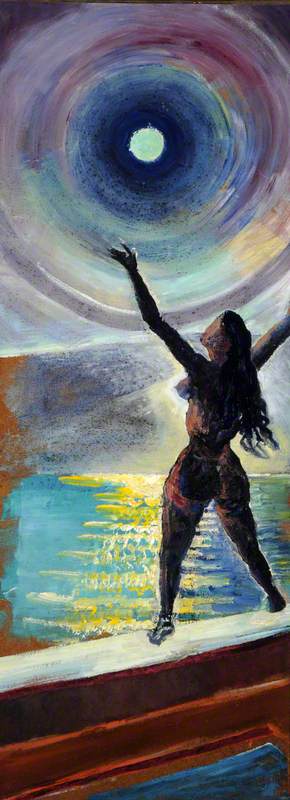
The moon has been a dominant symbol in mythology throughout the ages, taking on all manner of meanings. For a twentieth-century depiction of the emotional pull of the moon see Crying for the Moon by Francis Ferdinand Maurice Cook, which shows a woman with arms outstretched, face held upwards towards the moon.
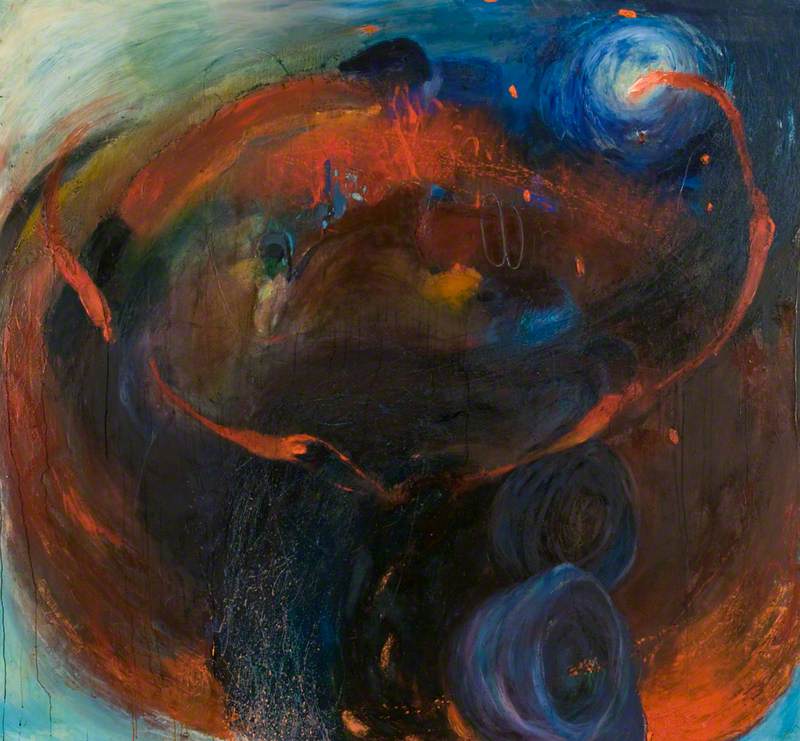
Moon Dance c.1990
Louise Ritchie (b.1967)
University of Dundee, Duncan of Jordanstone College Collection
Moon Dance by Louise Ritchie also captures the mythology of the moon (and brings to mind the eponymous Van Morrison song).
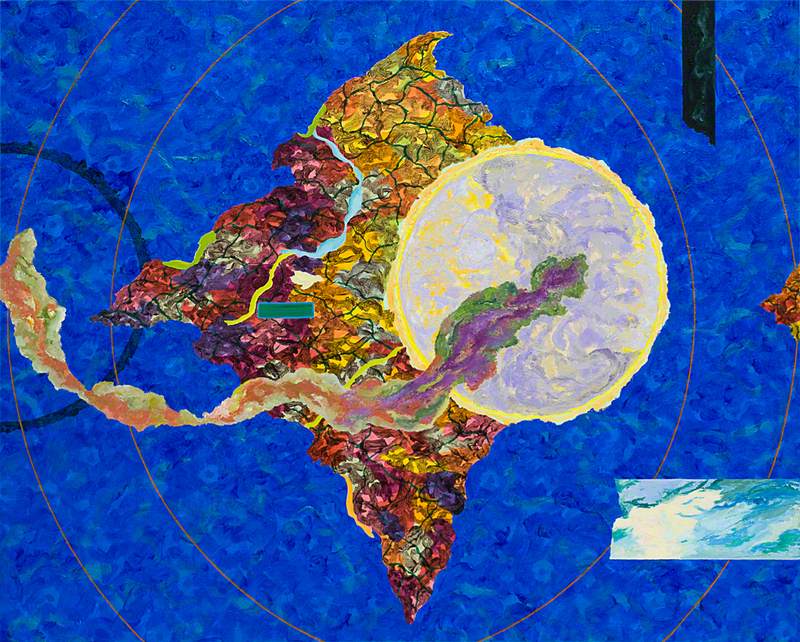
The moon has seeped into our language and expressions and a creative take on this is Once in a Blue Moon by Vanda Harvey, and the painting Over the Moon.
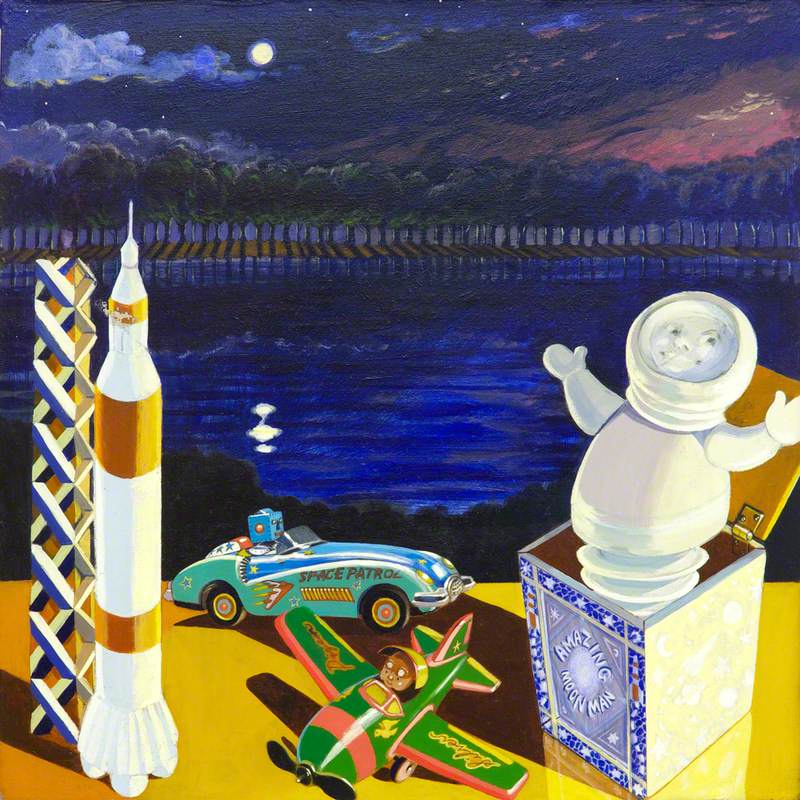
Over the Moon
Anna Todd (b.1964)
Cardiff and Vale University Health Board
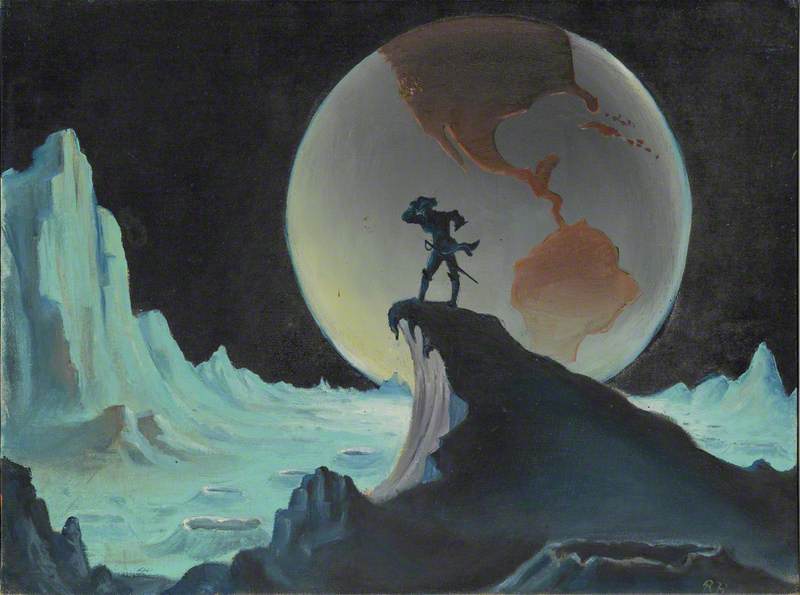
Mankind's yearning to land on the moon is seen in the cartoonish Baron Munchausen on the Moon and Baron Munchausen Arrives on the Moon by Ray Harryhausen.
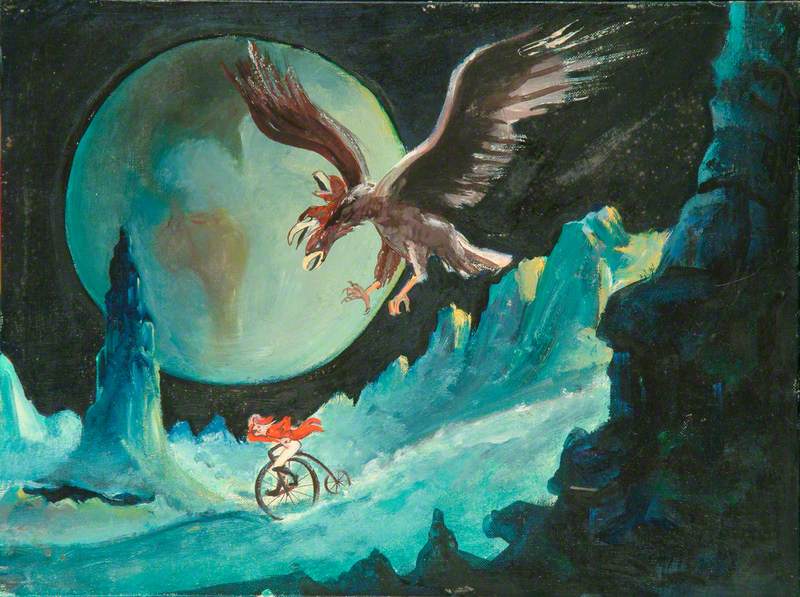
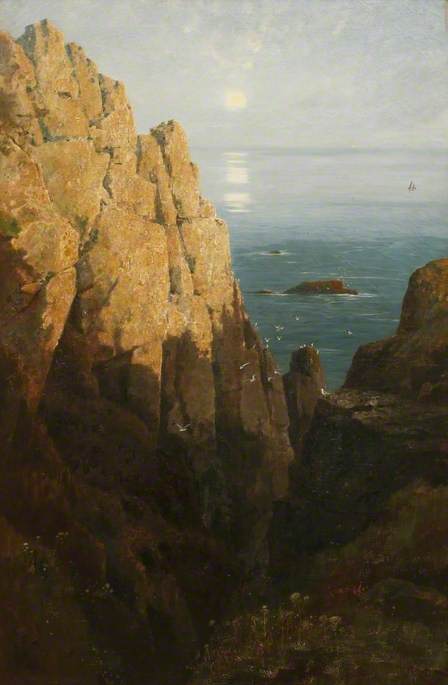
I always find the moon when visible in daylight so haunting and this is well shown by Richard Harry Carter in The Rising Moon and Day's Departure and this painting of Morning attributed to Henry Pether.
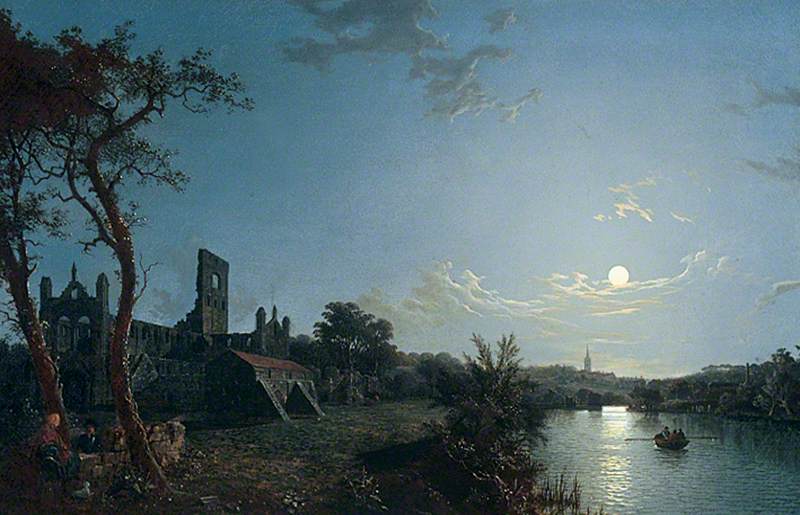
Meanwhile, Night by James Arthur O'Connor shows just how much light there is to be found in darkness.
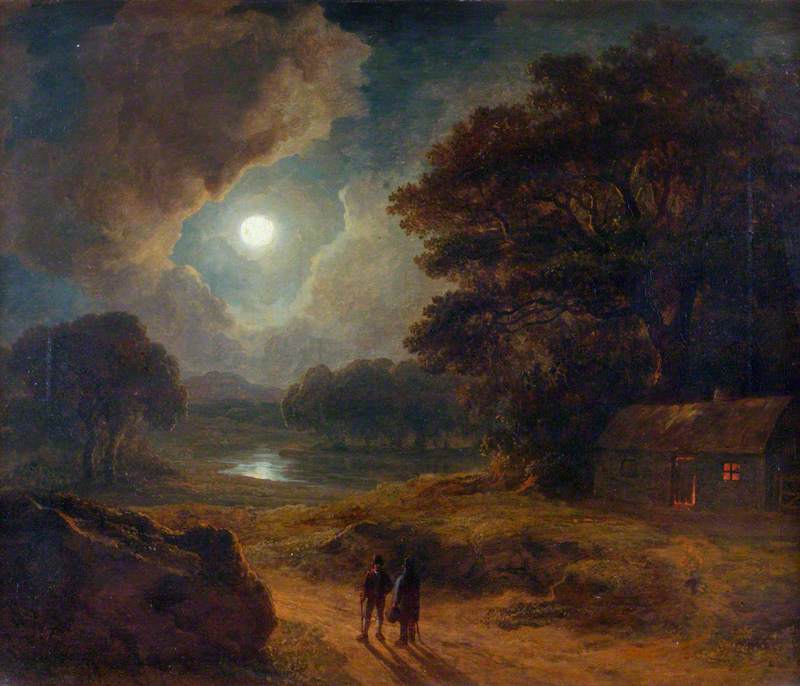
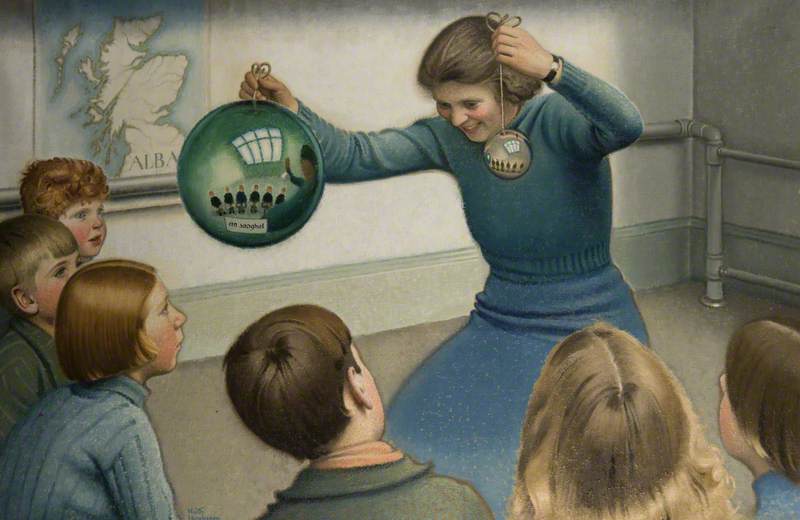
The painting The Moon Goes round the Earth by Keith Henderson shows school children being taught about the movements of the moon and brings to mind memories of first learning about the moon and wondering at it, dreaming about one day walking upon it, or trying to discern the wistful face of the man in the moon.
Delving into artworks in the archive is a reminder that it is never too late to keep learning about all things lunar and appreciating anew the magnificence of the moon.
Anita Sethi, journalist, writer and critic
More stories
Artworks
Source: https://artuk.org/discover/stories/the-moon-in-art
0 Response to "Drawings of Trees With a Moon"
Post a Comment